
Surface Performance
Anodizing Pretreatment and Corrosion Resistance
Discover how anodizing pretreatment helps improve the corrosion resistance, durability and long-term surface performance of aluminium windows and doors exposed to humid, coastal and demanding environmental conditions.
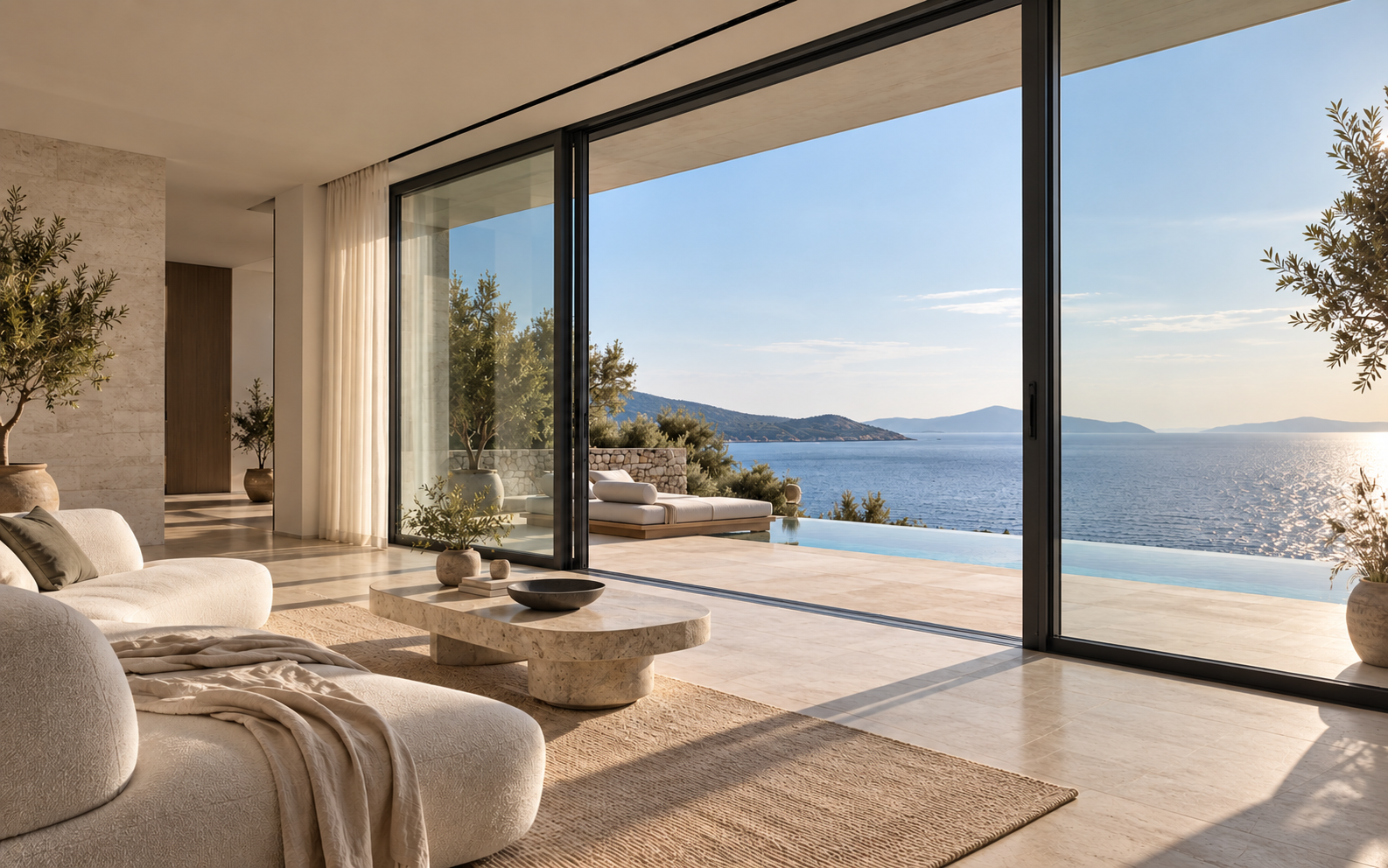
Long-lasting surface performance in aluminium windows and doors begins long before the final colour is applied.
For architectural aluminium systems designed to maintain their appearance and performance for many years, the preparation of the aluminium profile before powder coating is just as important as the quality of the final finish itself.
Exterior aluminium windows, doors and façade systems can be continuously exposed to moisture, rainfall, UV radiation, air pollution and, in coastal environments, airborne salt.
These conditions can place additional stress on aluminium surfaces over time.
For this reason, Linea Rossa applies anodizing pretreatment before electrostatic powder coating to aluminium profiles intended for high-humidity, coastal and other demanding applications.
This additional surface preparation becomes part of a complete protection system designed to support both corrosion resistance and long-term coating performance.
What Is Anodizing Pretreatment?
Anodizing is an electrochemical surface treatment that creates a controlled oxide layer on aluminium.
Anodized aluminium is often associated with metallic finishes in which the anodized surface itself remains visible.
In the process used for selected Linea Rossa architectural aluminium systems, however, anodizing is used differently.
It acts as a pretreatment beneath the final powder coating.
The purpose of this process is to prepare the aluminium surface before coating and provide an additional layer within the overall surface protection system.
Once the anodizing pretreatment is completed, electrostatic powder coating is applied to create the required colour, texture and architectural finish.
This means that anodizing and powder coating are not competing surface treatments.
They perform different functions and work together as part of the same finishing system.
Why Is Surface Preparation Important for Aluminium Profiles?
A newly powder-coated aluminium profile can look perfectly smooth and uniform.
However, the true performance of an aluminium coating is measured over years rather than on the day it leaves the production line.
Several factors influence the long-term durability of powder-coated aluminium profiles:
- Aluminium surface preparation
- Pretreatment before powder coating
- Quality of the powder coating
- Coating thickness and application
- Curing conditions
- Environmental exposure
- Cleaning and maintenance
Proper surface preparation creates the foundation for the coating system.
At Linea Rossa, anodizing pretreatment is an important part of this approach.
The objective is not only to achieve an attractive architectural finish, but also to support the adhesion, durability and corrosion resistance of the complete surface system.
How Does Anodizing Improve Corrosion Resistance?
Aluminium naturally forms a thin oxide layer when exposed to air, which gives the material a certain level of corrosion resistance.
In architectural applications, however, aluminium windows and doors may remain exposed to environmental conditions for decades.
Moisture, rain, temperature changes, atmospheric pollution and salt carried through the air can all affect exterior surfaces.
This is particularly relevant for coastal aluminium windows and doors, where airborne salts can accumulate on exposed profiles.
Anodizing pretreatment creates a controlled oxide layer before the powder coating is applied.
This treated surface helps create a more robust foundation for the coating system and supports the long-term performance of aluminium profiles used in demanding environments.
The combination of anodizing pretreatment and electrostatic powder coating provides a layered approach to surface protection.
The anodizing stage supports the aluminium substrate, while the powder coating provides the final architectural colour and appearance.
Why Is Corrosion Resistance Important for Coastal Aluminium Windows and Doors?
Coastal buildings create more demanding conditions for exterior building materials.
Salt particles carried through the air can settle on aluminium windows, doors, sliding systems and façade profiles.
When combined with humidity and moisture, these deposits can increase the demands placed on the surface finish.
For this reason, selecting the correct surface treatment is particularly important for aluminium systems installed in:
- Coastal residential projects
- Seafront villas
- Hotels and resorts
- High-humidity environments
- Marine-influenced locations
- Large glazed façades
- Exterior sliding and folding door systems
In these applications, the visible powder-coated finish is only one part of the protection system.
The preparation underneath the coating also plays an important role in long-term surface performance.
Anodizing and Powder Coating: What Is the Difference?
Anodizing
Anodizing is an electrochemical process that modifies the aluminium surface by forming a controlled oxide layer.
It can be used either as a final architectural finish or as part of a pretreatment system.
Powder Coating
Powder coating applies a dry coating material electrostatically to the aluminium surface.
The coated profile is then cured to form a durable decorative finish.
Powder coating gives architects and designers access to a wide range of colours, textures and surface effects.
In the Linea Rossa process discussed here, the sequence is:
aluminium profile → anodizing pretreatment → electrostatic powder coating → finished architectural surface
Although the anodizing layer is no longer visible after powder coating, it remains an important part of the complete surface treatment system.
What Are the Benefits of Anodizing Before Powder Coating?
Using anodizing as a pretreatment can provide several benefits within a properly specified aluminium finishing system.
These include:
- Supporting corrosion resistance
- Improving surface preparation before coating
- Creating a controlled aluminium oxide layer
- Supporting long-term coating performance
- Providing additional protection in humid conditions
- Improving suitability for coastal environments
- Supporting the durability of exterior aluminium profiles
For architects, façade consultants, contractors and fabricators, these factors can be particularly important when specifying aluminium windows and doors for demanding projects.
How Long Do Powder-Coated Aluminium Windows and Doors Last?
There is no single lifespan that applies to every powder-coated aluminium system.
Surface durability depends on the complete specification.
Important factors include the preparation of the aluminium, pretreatment system, powder coating quality, environmental exposure, application conditions and maintenance.
With the appropriate surface preparation and coating system, surface durability targets of up to 25 years can be achieved in suitable applications, depending on the coating specification, environmental conditions and maintenance programme.
Location also plays an important role.
An aluminium window installed in a sheltered inland environment will not experience the same conditions as an aluminium sliding door installed close to the sea.
For this reason, surface treatment systems should always be selected according to the actual exposure conditions of the project.
Why Does Maintenance Matter?
A high-performance surface treatment does not eliminate the need for maintenance.
Dust, pollutants, salt and other environmental contaminants can gradually accumulate on aluminium window and door profiles.
This is particularly important in coastal environments, where salt deposits may remain on exterior surfaces.
Regular cleaning using appropriate methods helps maintain both the appearance and surface performance of powder-coated aluminium.
Cleaning frequency should be determined according to the location and exposure of the building.
Projects located close to the sea or in high-pollution areas may require more frequent maintenance than buildings in less demanding environments.
Surface Quality Starts Before the Final Finish
When people look at aluminium windows and doors, they usually notice the colour, profile design, proportions and overall architectural appearance.
But many of the processes that determine long-term surface performance are invisible once the system has been installed.
Anodizing pretreatment is one of these processes.
At Linea Rossa, we consider surface preparation an essential part of producing high-performance architectural aluminium systems.
For aluminium windows and doors exposed to humid, coastal or demanding environments, anodizing pretreatment before electrostatic powder coating helps create a stronger foundation for long-term surface performance.
Because a durable aluminium finish is not defined by one layer alone.
It is the result of the right aluminium profile, surface preparation, anodizing pretreatment, powder coating system, controlled production process and regular maintenance working together.
Frequently Asked Questions
What is anodizing pretreatment?
It is an electrochemical surface treatment that creates a controlled oxide layer on aluminium and, in this application, prepares the profile before electrostatic powder coating.
How does anodizing pretreatment support corrosion resistance?
It creates an additional prepared layer beneath the powder coating, supporting the overall finish system against moisture, rainfall and airborne salt in coastal environments.
What should be considered for coastal aluminium windows and doors?
Surface preparation, coating quality, application and curing conditions, distance from the sea, environmental exposure and regular maintenance should all be evaluated together.
What is the difference between anodizing and powder coating?
Anodizing prepares and modifies the aluminium surface, while powder coating provides the final visible colour, texture and architectural appearance.
Let us evaluate the right surface solution for your project.
Contact Linea Rossa for more information about aluminium window and door systems, anodizing pretreatment and project-specific surface options.